THE BATTLE OF ARNHEM

With Operation Market Garden, Arnhem became the world stage for the largest operation on Dutch soil during World War II. From September 17 to 25, 1944, a joint Allied invasion was intended to capture several key Dutch bridges. During the Battle of Arnhem, the Rhine Bridge proved to be "a bridge too far." It became a catastrophe that played a key role in the further course of the war. Since 1945, Arnhem has dedicated September to the commemoration of the Battle of Arnhem. Arnhem is known worldwide for the Battle of Arnhem and the "Bridge Too Far." Unfortunately, the number of veterans is declining, and the memory is fading. Therefore, it is now time to commemorate the Battle of Arnhem in an innovative and dignified way. In an experience featuring art, film, and music, Bridge to Liberation brings the stories surrounding the Battle of Arnhem to life for everyone, from 8 to 88 years old. This lays the foundation for future commemorations of the Battle of Arnhem.
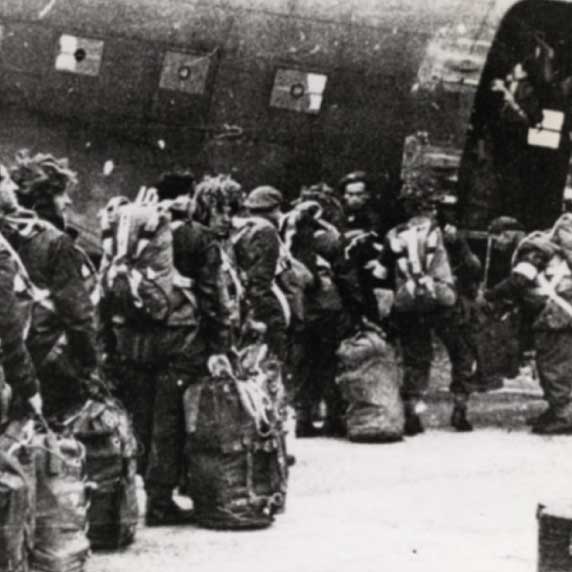
MARKET GARDEN

Only the southern Netherlands was liberated in the summer of 1944. To liberate the rest of the Netherlands, British Field Marshal Montgomery developed a plan. He gave this plan the codename "Market Garden." The plan consisted of two parts. The first part was called "Market." During this part, more than 35,000 airborne troops were dropped at key bridges (over the Maas, Waal, and Rhine rivers) between Eindhoven and Arnhem to hold them. The second part, called "Garden," was a code word for the British ground army. They would move overland from Belgium to Arnhem, via the bridges, to support the airborne troops. From there, they could easily push on to the rest of the Netherlands and Germany.

THE BATTLE OF ARNHEM

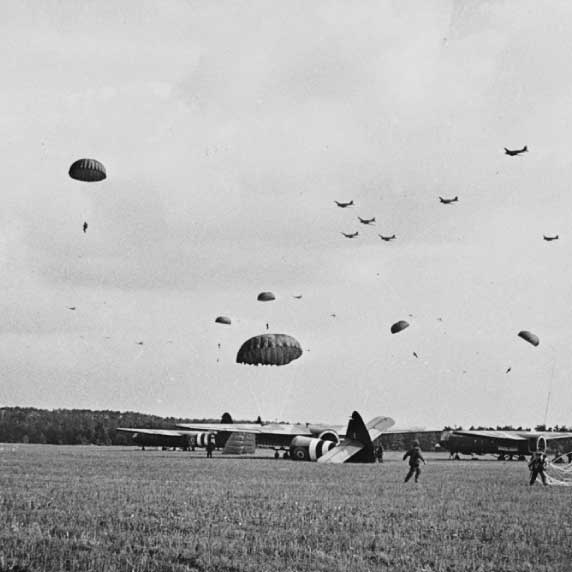
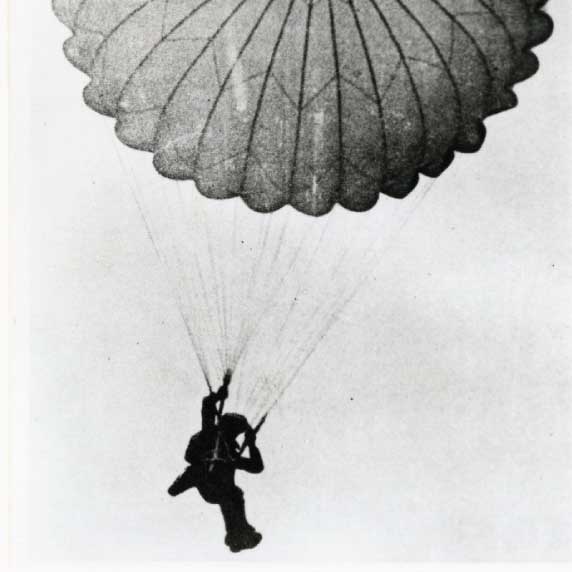
The Rhine Bridge at Arnhem is one of the bridges that must be captured as part of the Market Garden plan. This bridge lies deep in enemy territory. The plan is for more than 10,000 British and Polish airborne troops to hold the Rhine Bridge until the ground forces arrive. On September 17, 1944, the first planes carrying airborne troops took off. They landed in the area west of Arnhem. Meanwhile, American paratroopers landed at Son, Veghel, and Sint-Oedenrode to capture the other bridges. After fierce fighting, the Americans managed to capture all the bridges between Eindhoven and Nijmegen, leaving only Arnhem! On the first day, the British troops encountered little resistance from the Germans, who were surprised by the attack.
On the second day, the Germans fought back fiercely, and the British suffered greatly. Only 600 British paratroopers, led by Lieutenant Colonel John Frost, managed to reach the Rhine Bridge at Arnhem. After four days, they were forced to surrender; the Germans were too strong. The remaining British troops were trapped in Oosterbeek, and the Polish troops near Driel (across the Rhine). These troops had nowhere left to go but continued to hold on, hoping the rest of the ground army would still arrive to help them. After nine days of fighting, it became clear that the ground army would not arrive in time, and the remaining Allied airborne troops were forced to withdraw across the Rhine. They did this during the night of September 25th to 26th, during darkness, so as not to be spotted by the Germans. When the Germans awoke the next day, they discovered that all the British and Polish soldiers had disappeared, leaving only the wounded and paramedics.

HAARTSTEIN

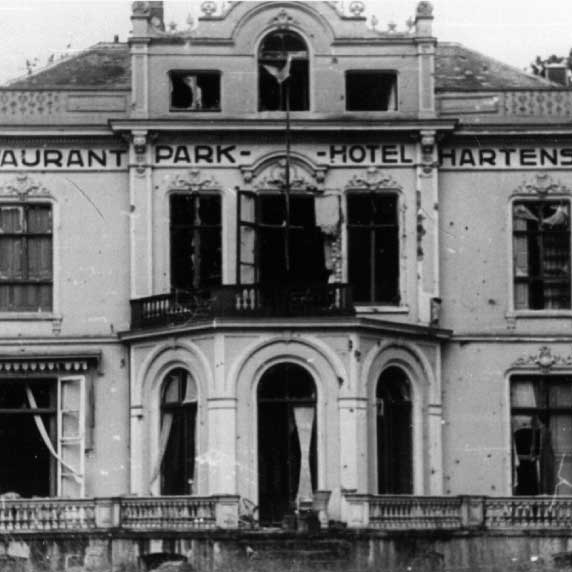
Only 600 British paratroopers managed to reach the bridge. The rest of the army became trapped in Oosterbeek. British General Major Urquhart chose the Hartenstein Hotel as his headquarters. This hotel, now home to the museum, was thus the center of the British retreat. Because Hartenstein was the British headquarters, fierce fighting raged around it. Nevertheless, the British persisted, and Major General Urquhart continued to command his troops from Hartenstein. Only when they had nothing left to fight with did they abandon the hotel and withdraw across the Rhine. Hartenstein was left behind, damaged. Photos: Hotel Hartenstein

ARNHEM: A GHOST TOWN

Due to the heavy fighting in the area around Arnhem, all residents of Arnhem and surrounding villages are forced to leave; they are evacuated. The Germans also fear that Dutch civilians will help the Allies. The residents take what they can with them, but are forced to leave a great deal of belongings unattended. After all the civilians are gone, Arnhem is a ghost town. Because the Allies have also bombed cities in Germany, the Germans take all the abandoned belongings in Arnhem back to Germany. They see it as a replacement for the things lost in their own cities. When the residents of Arnhem return in May 1945, there is almost nothing left but empty, ruined houses.

THE HUNGER WINTER AND PEACE

The failure of the Battle of Arnhem meant that all of the Netherlands north of the Rhine (West and North) was not liberated before the winter of 1944. This was a very harsh winter in the Netherlands, and because of the war, there was insufficient fuel to heat homes. Worse still, there was not enough food for everyone. Consequently, many people walked from village to village, day after day, in search of food. Sadly, 20,000 Dutch civilians died that winter due to the shortages.

This period quickly became known as the "Hunger Winter." Only in May 1945 did the military succeed in defeating Germany. German troops in the Netherlands also surrendered. On May 5th, peace negotiations took place at the "De Wereld" hotel in Wageningen. The west and north of the Netherlands were finally liberated. Only now could the reconstruction of the entire country begin.
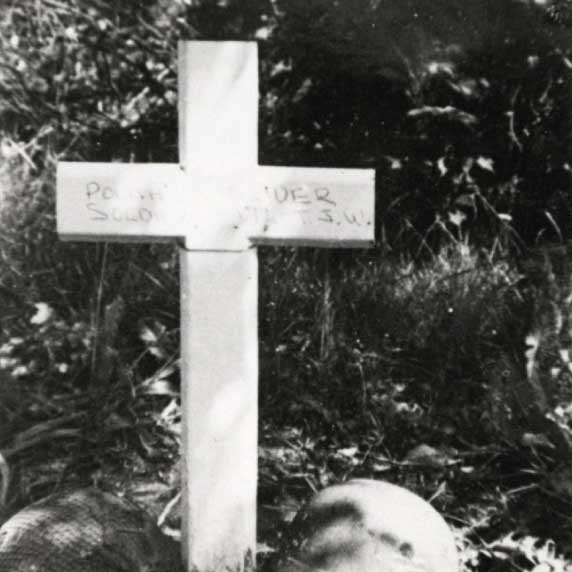
commemorate & celebrate

Every year, the liberation of the Netherlands is celebrated on May 5th. The day before, May 4th, is National Remembrance Day. In addition to the national events, the Arnhem region commemorates the lost Battle of Arnhem in September with commemorations in Arnhem, Ede, Driel, and Oosterbeek. 1,754 soldiers and several civilians are buried at the Airborne War Cemetery in Oosterbeek. British and Polish veterans and their families attend the commemorations every year. Want to learn more about the Battle of Arnhem? Then visit the Airborne Museum in Oosterbeek or visit the Airborne Arnhem website for more activities in the region.