Behind the scenes: the technology that brings Bridge to Liberation to life

Anyone standing at the Rijnkade on September 18 will see a unified whole: a stage at the foot of the John Frost Bridge, artists, music, film, light, and special effects. But before Bridge to Liberation can begin, construction, testing, and fine-tuning take place behind the scenes for days.

Interstage, Stagelight, CT Nederland, and Dream Fireworks have been involved with Bridge to Liberation for years. Each from their own field, but with the same goal: to ensure that the story is not only told, but can also truly be experienced. 

A stage in a special place

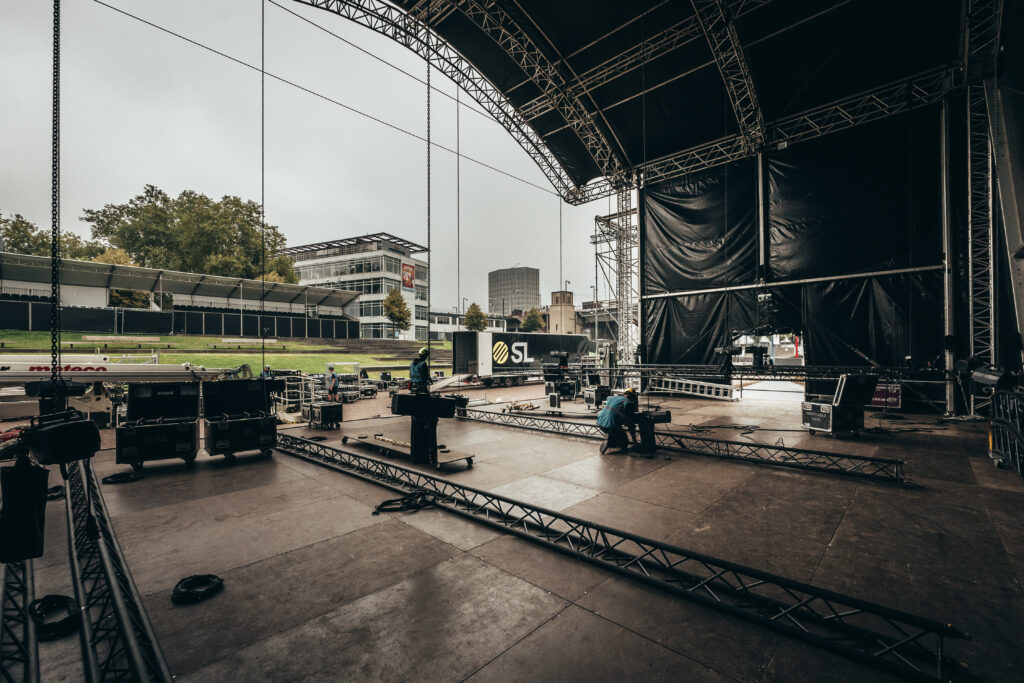
It literally starts at the base. Interstage is responsible for the construction of the stage and various temporary structures surrounding the production.

Building a stage on the Rijnkade is not the same as setting up a stage in an event hall. The location presents technical challenges every year. For instance, in previous editions, the stage was built on a pontoon or partly on the dike. Differences in elevation, limited space, and logistics call for custom solutions.

“There is a technical challenge, and it is up to us to realize a safe and practical solution for it together with the organization and other suppliers,” says Interstage. “The fact that we are literally building the stage on which the story of Bridge to Liberation is told gives this project just that little bit of extra meaning.”

Seeing and hearing what is happening

Once the stage is set, what happens on it must be easy for thousands of visitors to follow. Stagelight provides the lighting and sound amplification for this.

This involves not only what the audience on the Rijnkade hears and sees. The orchestra, the soloists, and the television broadcast each impose their own technical requirements. All these elements must ultimately come together in a single performance.

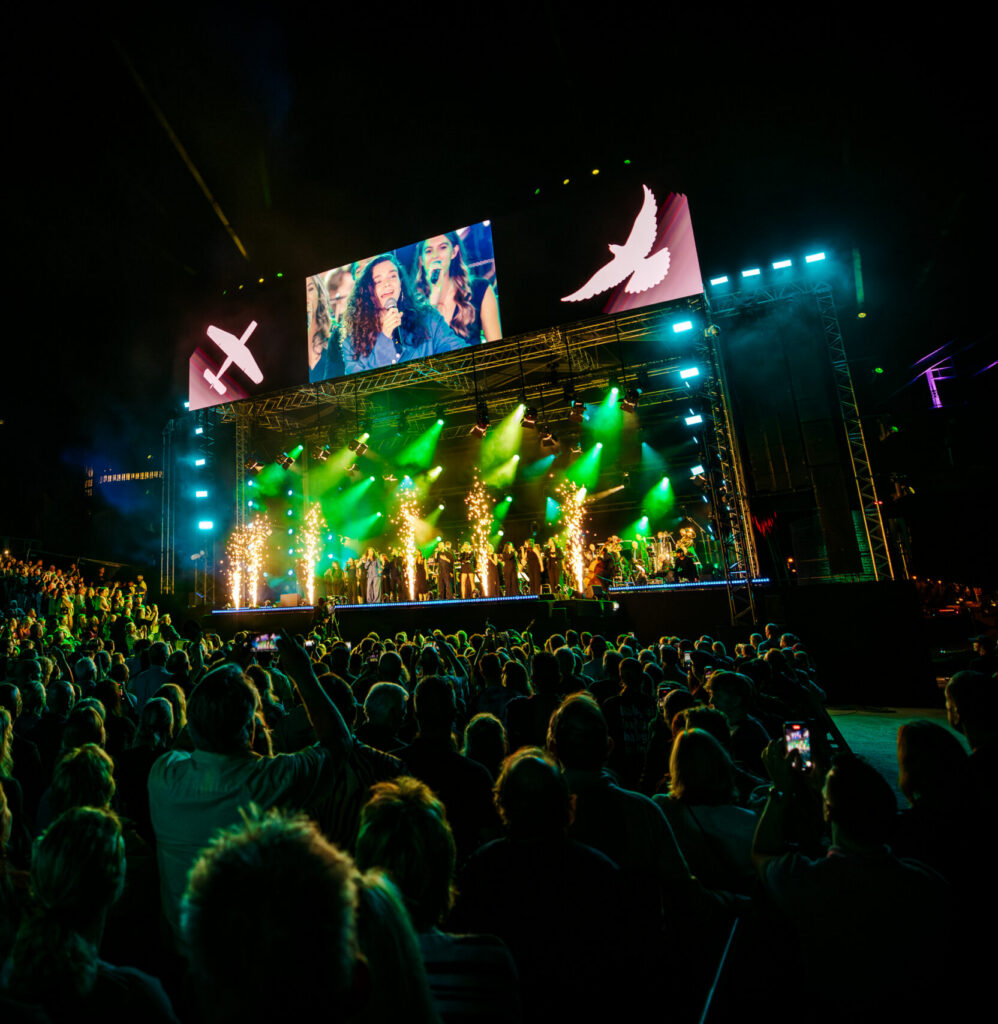
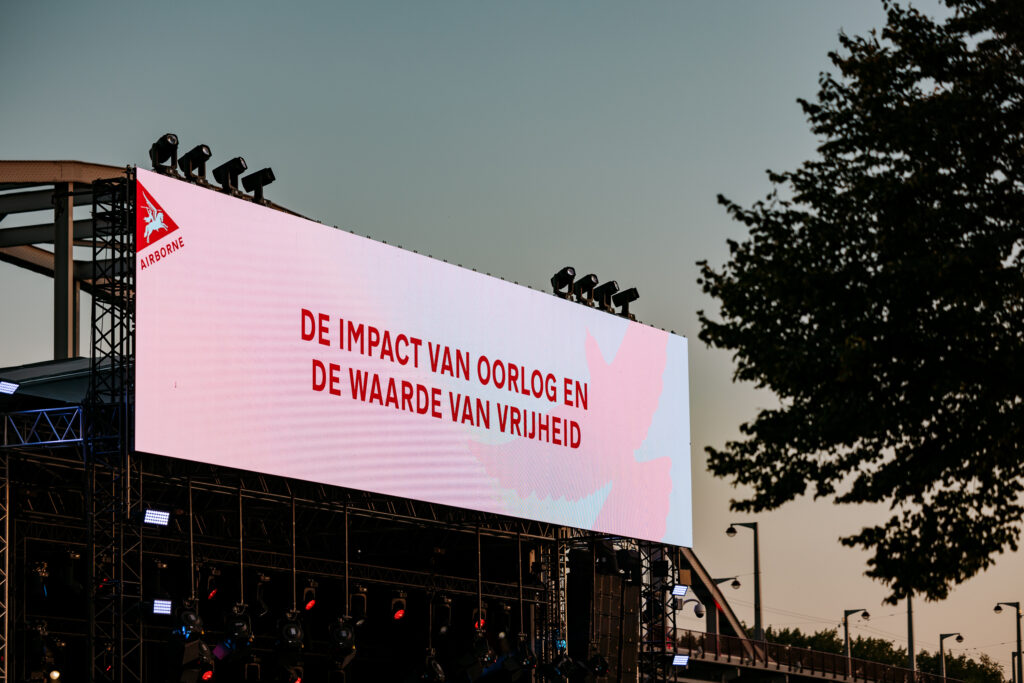
CT Nederland also plays an important role in this. The large LED screen hangs above the stage, for which they provide the controls and rigging. This ensures that the artists are clearly visible even further back in the audience, and allows the films and other images to become part of the performance.

It is precisely this combination of disciplines that makes Bridge to Liberation special. As CT Nederland describes it: “By combining art, music, and film, the story becomes accessible to everyone.”

From technique to goosebumps

And then there are the moments when technology becomes almost magic. Dream Fireworks provides the special effects and the closing fireworks.

For them, the parachutes stand out in particular. As soon as they hang in the air above the Rijnkade, a scene emerges that makes an impression year after year.
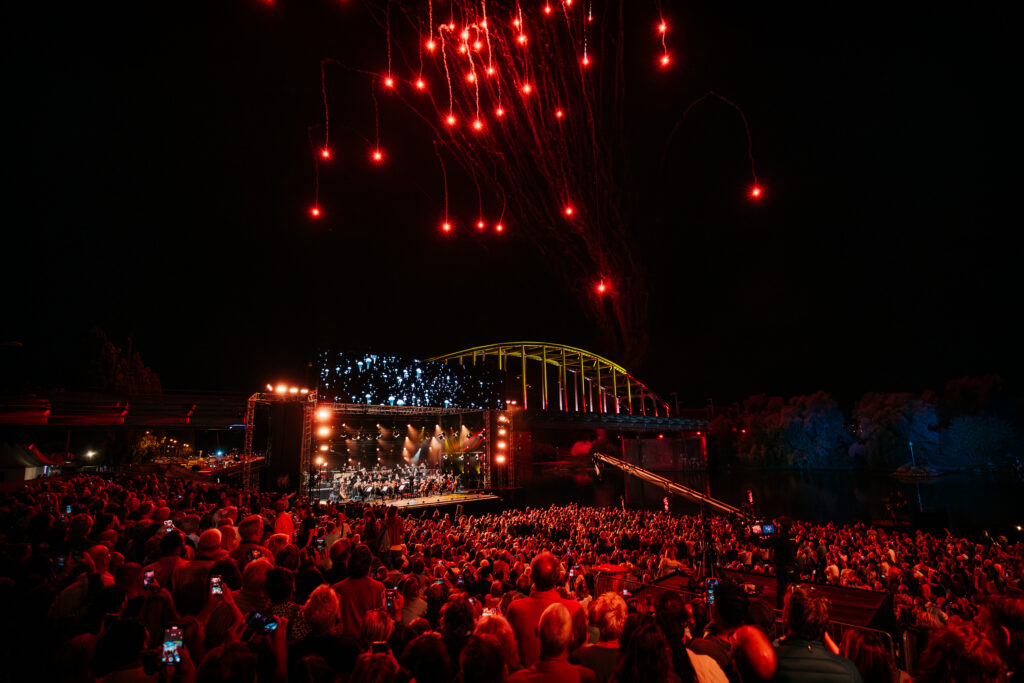
The way the story is presented to the audience gives you goosebumps. The fact that we get to bring that experience to life with our contribution makes it extra special

In this way, every supplier has their own task, but the power arises precisely from everything coming together. The stage, the lighting, the sound, the visuals, and the effects ultimately support the same story.

Freedom is not a given

Behind the technical collaboration, there is also another reason for these partners to return every year. Bridge to Liberation reminds them that the freedom in which they can live and work today is not something to be taken for granted.

For Interstage, freedom means, among other things, being able to make your own choices and express your opinion. Stagelight describes it as the space to develop and grow. For the internationally operating CT Nederland, freedom also means being able to collaborate across borders, regardless of origin or background.

Dream Fireworks summarizes why telling the stories of the Battle of Arnhem remains important:

The war is moving further and further away from us, but the message remains relevant: freedom is fragile and never to be taken for granted. That is why we must continue to commemorate, tell the story, and pass it on

On September 18, the public sees the final result. What remains largely invisible are the people, technology, and days of preparation required to make that one moment possible. Together, they ensure that the stories of Bridge to Liberation are not only told, but also seen, heard, and felt.