“Suddenly it is no longer a black and white character from an archive film, but a character that you can completely feel and almost touch.”.

Victor van Vloten has been the driving force behind the films shown at Bridge to Liberation since 2013. As a screenwriter and director, he brings the stories of World War II to life in a vibrant and moving way. He shares what goes into making the films. 
The making process

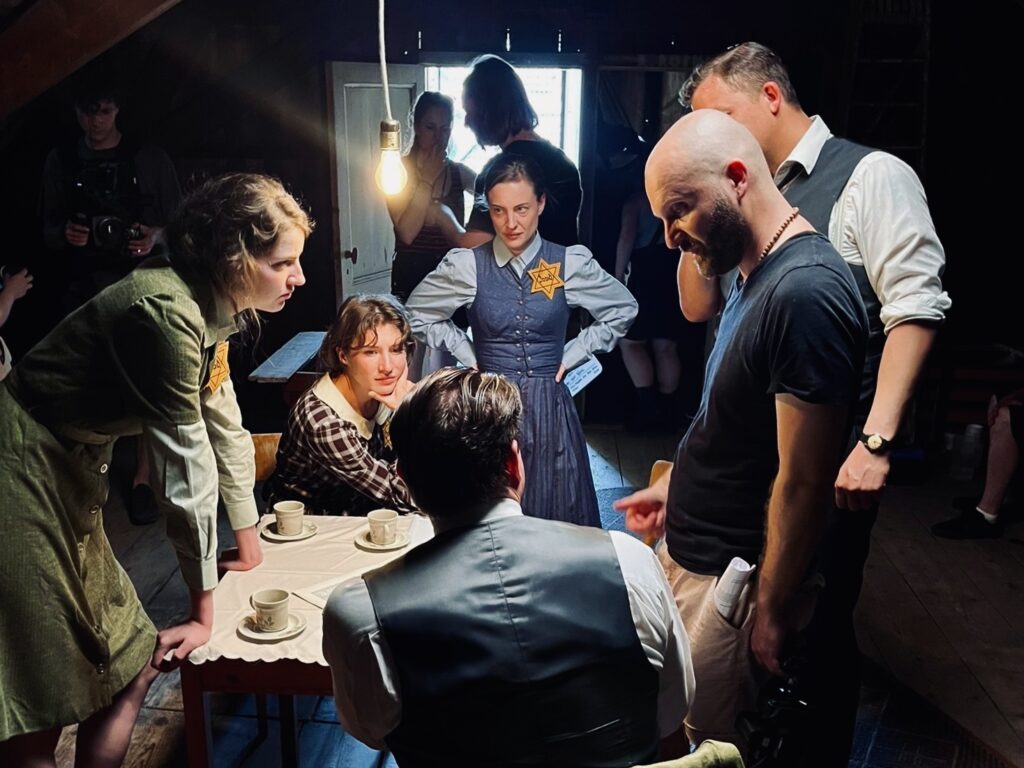
A film for Bridge to Liberation begins with developing the story. Shortly after the previous year's event, I sit down with Alvin, the artistic director and director, and Nazmiye, the screenwriter, to outline the general outline. We consider which characters are interesting and how we can illuminate the Battle of Arnhem in a unique way. Then I research characters with diaries and stories to deepen their perspectives. Once the story is written, we translate it into a screenplay. Nazmiye devises the voiceover, while Alvin decides how the films fit into the show. Once everything is ready, filming begins. These are always intensive, but impressive days.

Challenges

There's always a challenge in finding a unique perspective on a story that's been told so many times. These are such powerful stories, how do we fit them within the existing framework? Furthermore, ensuring historical accuracy is always a challenge. We frequently use re-enactors on set. They have extensive knowledge of the period and can also help us decide what's acceptable and what's not 

Inspiration

My inspiration comes mainly from personal stories, like the stories and letters from my grandparents. But also from diaries, for example. It brings you so close. Suddenly, it's no longer a black-and-white character from an archive film, but a character you can truly feel and almost touch. This year, I was even able to draw firsthand, because I was able to shake the hand of the main character in the film we're making and talk about his experiences. That makes this year extra special for me 

We also use archive footage, which allows us to truly connect our images with those shot at the time. Many brave men and women also picked up cameras back then, in incredibly bizarre circumstances, and started filming

Special moments

This year we're making a film about Max Wolff, a Jewish boy who left Arnhem to join the army. There's a scene in the film where he decides to leave everything behind and walks towards his new destiny

During filming, a large boar unexpectedly appeared, right where the actor was supposed to walk. The boar was practically standing in the exact spot where Max's fate should be. In many cultures, the boar symbolizes strength and bravery. It was so symbolic for the character of Max Wolff and the choice he makes there. On the other hand, in Jewish culture, the boar symbolizes 'the enemy,' the one he has to fight. There was so much symbolism in that moment, I found it very special

Freedom

During the Battle of Arnhem, people had to flee their homes to regain their freedom, or perhaps even their dignity and a foundation for life. Nowadays, I hear people look back on it and say, "How awful, we should have welcomed these people as heroes!" While I appreciate that, I also find it painful to see how refugees from Syria or other countries are being treated here now

There are many things from the stories of World War II that are still relevant today or that make me think. For example, 'How do we treat people who have to leave their homes? How do we ensure that everyone feels welcome and valued, regardless of their background?' These questions are still important. I hope our films encourage people to see these parallels and think about how we can guarantee freedom and dignity for everyone